AHC50122 Diploma of Agriculture
Confidently manage farm operations, people and production
Is this course for you?
Diploma of Agriculture is for you if:
- You have an understanding and experience in all practical on-farm aspects, in leading a team and are keen to step up into a managerial position
- You’re a farm owner or manager seeking to strengthen your agribusiness management skills
- You either provide or are seeking a career in providing production advice and services to agricultural enterprises and are keen to develop advanced skills to better analyse information
- You’ve partnered into a multi-generational farming family and want to learn all aspects of running the enterprise
- You’re returning to the family farm as part of a succession plan and need to develop the knowledge to run an agribusiness
- You’re interested in pivoting your career as part of tree change and are now working, or looking to work, in agriculture
- You’re keen to deepen the knowledge gained completing the Certificate IV in Agriculture.
How can this course help you?
By completing the Diploma of Agriculture you’ll be able to:
- Plan and manage whole farm production systems
- Lead staff and manage workforce requirements
- Prepare and monitor budgets and financial performance
- Oversee livestock, cropping, soil and pasture systems
- Implement workplace safety, sustainability and compliance processes
- Make informed decisions using production and financial data
How is this RIST course different?
The RIST Diploma of Agriculture is delivered via a blended training model which integrates workplace based practical learning with structured theory aligned to manager responsibilities.
We work hard to provide:
- Hands on, practical skills development with leading industry trainers
- Training which replicates real-world situations and experiences
- Small class sizes
- Flexible delivery
- A friendly, supportive place to learn
- Clear career pathways
You’ll be learning alongside like-minded students and we encourage you to participate in robust discussions to widen your perspective and deepen your understanding.
Our focus is on developing you into a well-rounded graduate who brings initiative and independent thought into the workplace. A person who is adaptable, resilient, resourceful and technologically competent who can make a positive difference in your workplace and community.
All our programs reflect industry needs and are adapted to meet future trends. RIST trainers and assessors are specialists in their field and industry current. They are well placed to provide high-quality, relevant, up-to-date training so you learn skills that are sought after by industry.
You’ll also spend time outside of the classroom actively involved in hands-on practical activities, including workshops, field trips, field days, visiting host farms, and meeting business owners to round out your agricultural knowledge. This direct experience helps you build the skills and confidence needed to apply this knowledge in the real-world.
We are able to offer flexible delivery which blends face-to-face, workplace-based, online, virtual classrooms, and Recognition of Current Competency (RCC). This flexibility means you can build your learning around your lifestyle.
Course Topics
Work Health Safety
Manage workplace health and safety processes including developing appropriate workplace health and safety policies and procedures that demonstrate commitment to workplace health and safety.
Policies and Procedures for Environmental Sustainability
Develop workplace policy and procedures for environment and sustainability on farm and in Agriculture.
Soil Production
Research and analyse soil characteristics. Establish a soil management plan for the enterprise. Develop and monitor appropriate soil amendment practices.
Livestock Production
Assess land resource capability and establish short- and long-term livestock production targets in line with business plans. Determine nutrition requirements for livestock and the most appropriate feeding plan to comply with workplace procedures, work health and safety, animal welfare and biosecurity legislation and codes of practice and sustainability practices.
Manage Enterprise Staff Requirements
Manage people performance using defined employment requirements, performance management practices and training programs. Understand personnel record management and maintenance requirements to meet legislative requirements.
Machinery Management
Implementation of a machinery management system for an enterprise including coordinating and managing services, maintenance and operations of all machinery and equipment.
Crop and Pasture Production
Develop and implement a pasture and crop management program, monitor crop and pasture growth and fodder production, and review production outcomes.
Health and Welfare Strategies
Develop and implement preventative health treatment and welfare strategies for animals to comply with workplace procedures, work health and safety, animal welfare and biosecurity legislation and codes of practice and sustainability practices.
Budgets and Financial Reports
Understand various types of financial reports and when they would be used. Prepare and monitor budgets using financial management systems for specific purpose and audience.
Business Production
Develop and review the enterprise’s business goals and vision, its land use, human resource development and financial plans. Plan production for a whole, land-based business including reviewing strategic plans and production goals, developing financial and marketing plans, developing workforce skills and managing land usage.
Core Units of Competency
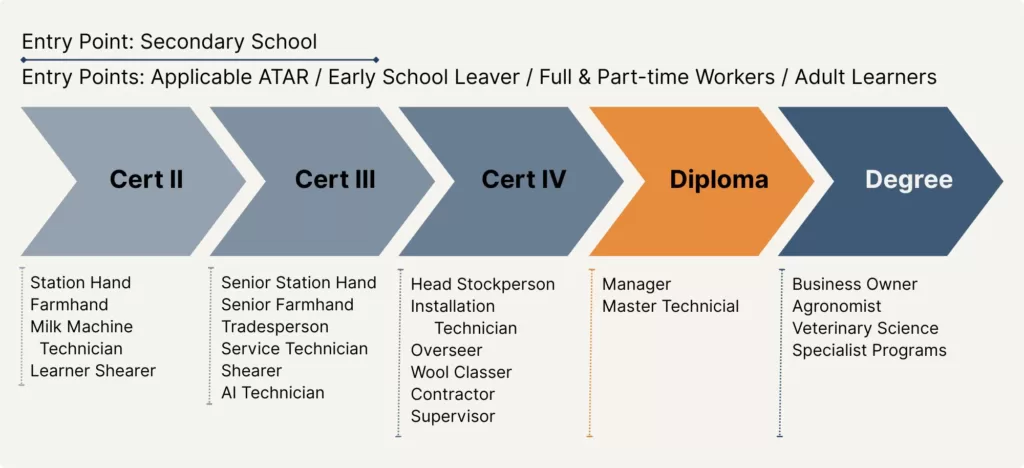
Course Pathways and Potential Job Outcomes
Application process
STEP 1:
STEP 2:
STEP 3:
STEP 4:
STEP 5:
Contact the friendly RIST team.
Register online.
Participate in a pre-training interview.
Commence your training program.
Receive your enrolment confirmation.
Details
Course:
Duration:
Location:
Delivery:
Cost:
Participants:
Entry requirements:
AHC50122 Diploma of Agriculture
12 to 24-months
Hamilton (and Terang subject to demand)
Blended model
This training is supported by Victorian Government Skills First funding. Course fees may vary depending on individual circumstances and eligibility criteria to access government support. Students may also be eligible for a Scholarship.
Limited to small groups of up to 16 participants.
Regular access to an agricultural workplace.
Completion of a Language, Literacy, Numeracy and Digital (LLND) pre-training review.
Further Information
Have a question? Need a hand with applying for the course?
Speak with our friendly RIST team.
Call 1800 883 343
Email info@rist.edu.au
Students with disabilities are encouraged to apply.