Needlestick Injuries on the Farm – Know What to Do This Spring
As livestock handling duties ramp up through spring, staying safe around animal health products is more important than ever.
At a recent Farm Safety Day held at RIST with WorkSafe and the National Centre for Farmer Health, participants raised concerns that delayed responses to needlestick exposure and injuries often occur because those working with livestock may not recognise the risks, and upon presentation when seeking medical assistance, medical staff may be unfamiliar with the correct treatment procedures.
Had exposure to an animal health product or experienced a needlestick Injury? Here’s What You Need to Know
Every year across Australia, farmers and agricultural workers experience preventable needlestick injuries, with over 80% of livestock farmers reporting they’ve had one at some time.
These injuries often happen due to a mix of factors:
- Use of oil-based vaccines
- Unpredictable livestock movement
- Poor animal restraint
- Unsafe vaccination technique
- Inappropriate first aid or medical treatment
- Difficulty finding information on the injectable substance or its Safety Data Sheet (SDS)
- Delays in seeking treatment
Unfortunately, many people don’t seek help until pain, infection, or even surgery is required.
What You Should Do if an Injury Occurs
The National Centre for Farmer Health (NCFH) provides clear guidance and a handy flyer outlining what to do following accidental exposure or injection.
Download and print the resource here:
Key steps include:
- Seek immediate medical attention.
Take the product box, label or SDS with you. - Call the manufacturer’s 1800 number (found on the packaging).
- Access the relevant SDS directly from the manufacturer’s website (noting some third-party sites can be up to 4 years out of date).
- Contact the Poisons Information Centre on 13 11 26 and ask for medical information for practitioners.
- Report the incident to the Australian Pesticides and Veterinary Medicines Authority (APVMA) – anyone can report, not just the company or doctor.
The NCFH resource also includes a table of livestock injection products, identifying which are more likely to cause severe reactions or tissue irritation.
For Health Professionals
Animal health companies are required to report human exposures to the APVMA, but they can only do so if notified. Health and medical professionals are encouraged to report any adverse patient experiences linked to animal health products.
Specialist support for serious needlestick injuries involving oil-based vaccines is available from:
- Dr Stephen Cliftorth, Glenelg Surgical Clinic, Hamilton VIC (03) 5572 5233
- Dr Stephen Salerno, Plastic and Reconstructive Surgeon, Essendon VIC (03) 9337 0032 or (03) 9076 2000 (The Alfred Hospital, Melbourne)
Prevention is Always Better Than Cure
To reduce your risk:
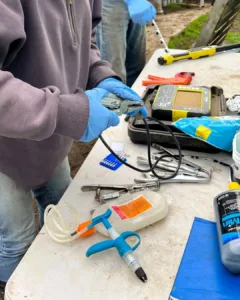
- Use the one-handed vaccine technique
- Keep your non-vaccinating hand away
- Restrain animals safely
- Don’t tent skin
- Use pliers to remove needles and dispose of them correctly
Let’s keep safety front of mind this season. Make sure everyone on your team knows what to do if a needlestick injury occurs.
Download the flyer from the National Centre for Farmer Health today.
Interested in studying agriculture with RIST in 2026?
We’re opening enrolments for Certificate II and Certificate III in Agriculture courses in November!
If you’d like to be added to the waitlist and be first to know when enrolments open, register at the button below.