Preventing Metabolic Disease in Pregnant Ewes
By Sarah Hamilton, RIST Program Support
As a large animal veterinary assistant, I was fortunate to be involved in the Unlocking Ewe Mortality Project (2019/2020) with Livestock Logic and the Murdoch University MLA/AWI Merino Ewe Mortality Project (2024) with Apiam.
These projects investigated the causes of ewe mortality during late pregnancy and lambing with the common causes of death diagnosed by veterinary PM were dystocia, trauma, septicaemia, metabolic diseases (hypocalcaemia/pregnancy toxaemia), uterine prolapse, dorsal vaginal wall rupture and vaginal prolapse. Due to the research this has enabled preventative strategies to be in place for producers so they can reduce ewe and lamb losses through better management.
One of the most valuable lessons I have taken from these projects is the importance of ensuring ewes have adequate calcium, magnesium and sodium during late pregnancy. I have since adopted this practice in my own sheep enterprise by providing a loose mineral lick containing Causmag (magnesium oxide), agricultural lime (calcium) and salt (sodium chloride) from approximately six weeks before lambing.
Why are pregnant ewes at risk?
During the last six weeks of pregnancy, lambs grow rapidly, placing huge nutritional demands on the ewe. Twin- and triplet-bearing ewes are particularly at risk because they require more energy and minerals than single-bearing ewes.
If these nutritional requirements are not met, ewes are more likely to develop metabolic diseases, including:
- Pregnancy toxaemia (Twin Lamb Disease) – caused by an energy shortage during late pregnancy.
- Hypocalcaemia (Milk Fever) – caused by low blood calcium levels.
- Hypomagnesaemia (Grass Tetany) – caused by low blood magnesium levels.
These conditions can result in weak or recumbent ewes, difficult lambings, poor mothering ability, and even ewe and lamb deaths.

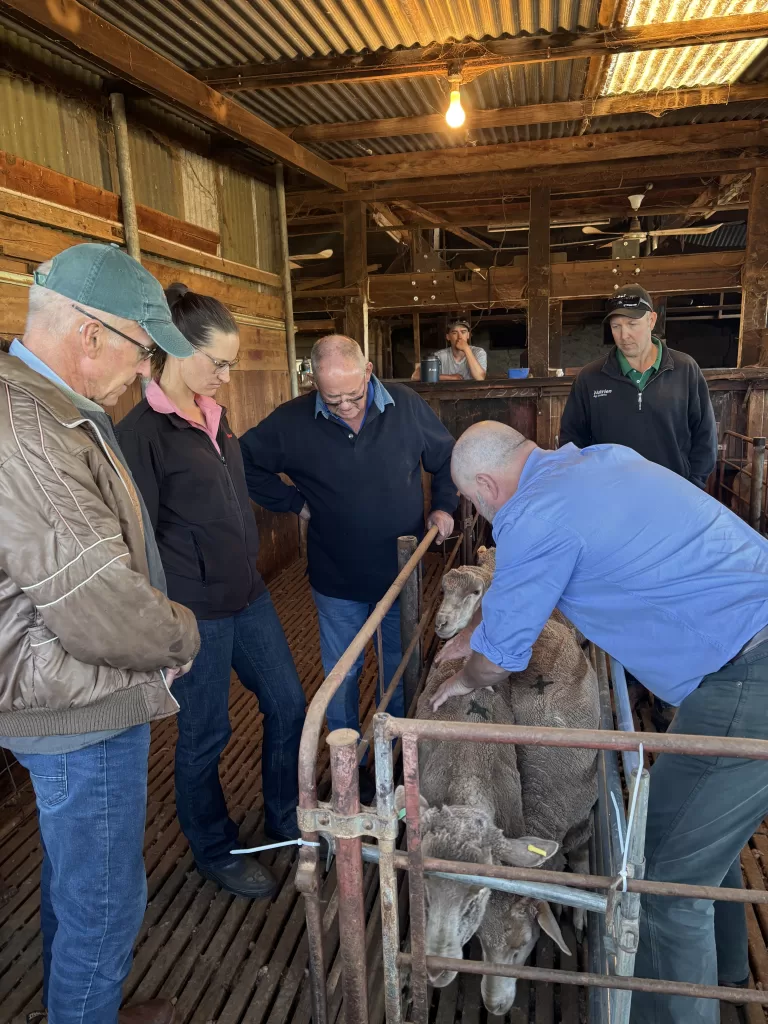
Above: Sarah with her Border Leicester rams. Photo by Tracey Kruger.
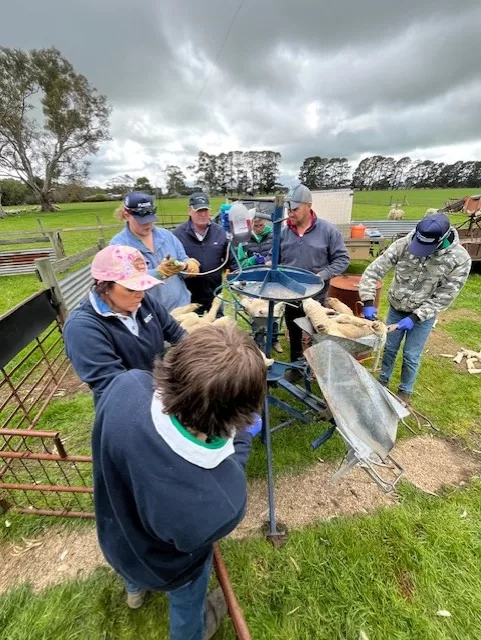
Below: Sarah training RIST students in marking at her property in Cavendish.
What increases the risk?
Several factors can increase the likelihood of metabolic disease:
- Twin- or multiple-bearing ewes
- Older ewes
- Cold, wet or stressful weather
- Handling or moving ewes close to lambing
- Grazing lush grass or cereal crops that are naturally low in calcium and magnesium
- High potassium pastures or fertilisers, which reduce magnesium absorption
Research has shown that even when pastures appear adequate, many twin-bearing ewes can still have low calcium or magnesium levels.
A simple mineral supplementation strategy
One practical and inexpensive management strategy is to provide a loose mineral lick containing:
- Causmag (Magnesium Oxide) – supplies magnesium, which is essential for muscle and nerve function and helps prevent grass tetany.
- Agricultural Lime (Calcium Carbonate) – provides calcium to support muscle function, bone health and the increased demands of pregnancy and early lactation.
- Salt (Sodium Chloride) – supplies sodium and encourages consistent intake of the mineral mix.
A commonly used mix is:
1 part Causmag : 1 part Lime : 1 part Salt
This is offered free-choice from approximately six weeks before lambing. At an average intake of around 20 grams per ewe per day, the cost is only around 2 cents per ewe per day, making it an affordable addition to many sheep enterprises.
Good management is about more than minerals
Mineral supplementation is only one part of good ewe management. Successful producers also focus on:
- Maintaining appropriate ewe condition scores.
- Pregnancy scanning to identify single- and twin-bearing ewes
- Providing adequate energy and protein during late pregnancy
- Minimising stress from handling close to lambing
- Providing suitable shelter and paddock conditions during lambing
Key Take-Home Message
While research continues, ensuring pregnant ewes receive adequate mineral nutrition is a simple, low-cost management practice that may help reduce the risk of metabolic disease when combined with good nutrition and sound management.
As someone who has worked alongside veterinarians and producers on these projects, implementing a Causmag, lime and salt loose lick has become an important part of my own late-pregnancy ewe management program. It is a practical example of how research can be translated into everyday farming to improve both animal welfare and productivity and what I can incorporate into my training and delivery with the students at RIST.
National Programs
Speak with us if you’re interested in RIST National Programs – Lifetime Ewe Management (LTEM), Weaners for Profit (WfP) or Heifers for Profit (HfP).
We can help you join or start a local group near you and confirm you subsidy eligibility.